
Part I of The U.S. Disaster Recovery Gap, a series on the distance between formal recovery systems and the communities they are built to serve.
The U.S. disaster recovery gap is the distance between what formal disaster recovery delivers and what communities actually need after severe weather. Across 403 billion-dollar disasters since 1980, that gap has fallen hardest on the households least able to absorb it.
In This Article
Public Service Is Not Only Government Work
Public service is not limited to holding office or working inside government. It also includes civic responsibility, community action, and the willingness to address public problems rather than only complain about them. Krutz and Waskiewicz explain that civic engagement helps people influence government, improve their lives, and build stronger communities (Krutz & Waskiewicz, 2021). So public service is not something abstract. It is a responsibility to act ethically, pay attention to what people are actually experiencing, and help ensure that institutions respond in a way that is fair and useful.
Three values matter most here: equality, community responsibility, and accountability. Equality, because people should not be treated differently or left behind simply because they have fewer resources. Community responsibility, because too many people are willing to point out problems without doing anything meaningful to help solve them. Accountability, because institutions that claim to serve the public should actually be responsive when people need them most.
FEMA’s National Disaster Recovery Framework states that recovery should be “unified, inclusive, and effective” (Federal Emergency Management Agency [FEMA], 2025, para. 1). That is how public service should work more broadly. It should protect people, especially when they are most vulnerable, and it should require both communities and institutions to take responsibility for the common good.
These values also shape what public service should look like in practice. It should not be detached from real human needs. It means understanding communities, representing people responsibly, and improving how institutions respond to crises. Public service means more than making statements. It means paying attention to whether the people most affected are actually being heard and helped.
The Public Problem: Defining the Disaster Recovery Gap
The problem is the gap between formal disaster recovery efforts and the actual needs of affected communities following severe weather events.
Just so we get this right: why is that a public problem rather than private misfortune? It affects large groups of people, often across entire towns, regions, or states, and one person acting alone cannot solve it. It requires collective action, coordination, and in many cases government intervention. It is also a democratic problem, raising questions about fairness, public accountability, and whether institutions are truly serving the people who depend on them most.
The scale is significant. NOAA reports that from 1980 to 2024, the United States experienced 403 weather and climate disasters that each caused more than $1 billion in losses, and the annual average rose to 23 such events during 2020–2024 (National Centers for Environmental Information [NCEI], n.d.). In 2024 alone, NOAA recorded 27 billion-dollar disasters in the United States (NCEI, n.d.).
What the Disaster Recovery Gap Looks Like Up Close
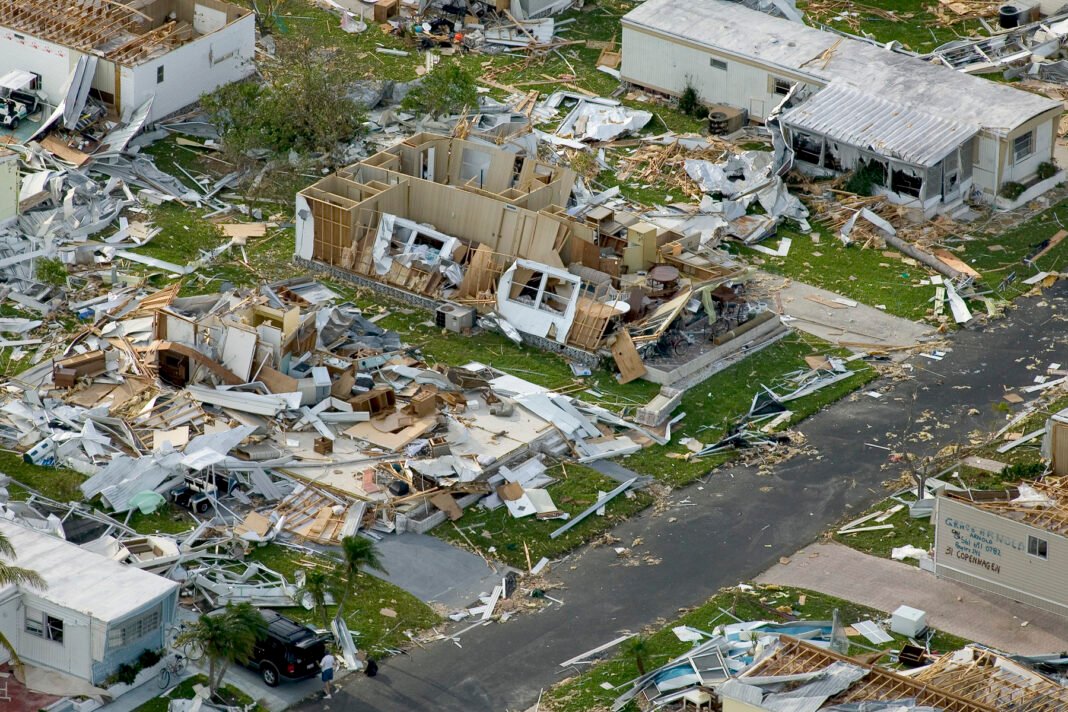
Typhoon Noru shows what that looks like on the ground. Cleanup work in Asia followed serious destruction and debris in places people depended on. What stands out is not only the damage itself. It is how easy it is for people to stand back and assume someone else will deal with it.
Similar patterns appear in New England after severe storms. Prolonged power outages showed how slow recovery, poor communication, and community disruption place a heavy burden on ordinary people. Even during storm events where evacuation and emergency communication mattered, people often found out through indirect channels rather than clear and direct notification. In each case the need was immediate, but the response was fragmented, delayed, or disconnected from what people on the ground actually needed.
How the Disaster Recovery Gap Deepens Inequality
Recovery gaps do not just slow rebuilding. They deepen inequality, weaken public trust, and make already vulnerable communities even more vulnerable.
GAO found that from 2016 through 2018, 5.6 million people applied for FEMA disaster assistance and 4.4 million were referred to the Individuals and Households Program, but about 2.4 million people were found ineligible. GAO also found that most applicants were uninsured and that a majority had incomes under $50,000 (Government Accountability Office [GAO], 2020).
Peer-reviewed research shows that natural hazard damage increases wealth inequality over time in the United States, and that recovery systems can reproduce unequal outcomes rather than correct them (Howell & Elliott, 2019). Disaster recovery is therefore not only about speed. It is also about whether the design of recovery systems produces fair results.
Now, why does equality sit at the center of this? Disaster recovery is never experienced equally. Wealthier people often have more flexibility, more savings, stronger insurance buffers, and sometimes even other places to go. Working-class families, renters, and people already living close to the edge often do not. When recovery systems are slow, fragmented, or difficult to navigate, those differences become even more severe. The problem is not only that storms happen. The problem is that the consequences fall hardest on the people least equipped to absorb them (GAO, 2020; Howell & Elliott, 2019).
A System Fragmented Across More Than 30 Agencies
The federal system itself reflects this challenge. GAO testified in 2025 that disaster recovery remains fragmented across more than 30 federal entities with different programs and requirements, making assistance harder to navigate. GAO also reported that FEMA is managing more than 600 open major disaster declarations, some from nearly twenty years ago (GAO, 2025).
If the system is difficult to navigate even for informed people, then it is even harder for households dealing with displacement, damaged homes, interrupted employment, or loss of access to food, medicine, and transportation.
Why Community Responsibility Belongs in the Analysis
Recovery should not depend entirely on whether a few individuals step up while everyone else watches. Krutz and Waskiewicz describe social capital as the value of social networks and the willingness of people to help one another and work together on shared problems (Krutz & Waskiewicz, 2021). Research on resilience reaches a similar conclusion: social capital and community networks are central to survival and recovery, and resilience is driven by social as well as physical infrastructure (Aldrich & Meyer, 2015). People should be willing to contribute to the common good rather than assume a problem belongs to someone else.
The 2030 Agenda Connection
This issue connects directly to the 2030 Agenda and the Sustainable Development Goals. SDG 11.5 calls for reducing the number of deaths, missing persons, directly affected people, and economic losses caused by disasters. SDG 13.1 calls for strengthening resilience and adaptive capacity to climate-related hazards and natural disasters. SDG 10.2 calls for the social, economic, and political inclusion of all people, regardless of status. SDG 16.6 calls for effective, accountable, and transparent institutions at all levels.
UNDRR warns that disasters erode development gains and slow progress toward the SDGs, especially in vulnerable communities that face repeated cycles of destruction and recovery. When disaster recovery gaps persist, they do not only damage communities in the present. They also undermine long-term progress on sustainability, inclusion, and institutional trust.
If this problem is not addressed, the consequences will keep compounding. The United States will remain in a cycle of increasingly expensive disaster response and uneven recovery. Vulnerable households will continue to recover more slowly than wealthier ones, and repeated disruptions will weaken trust in institutions and long-term community stability.
IDMC reported that the Americas reached a record 14.5 million internal displacements in 2024 and that the United States alone accounted for 11 million disaster-related movements, nearly a quarter of the global total (Internal Displacement Monitoring Centre [IDMC], 2025). That is not just an emergency management issue. It is a governance, development, and human security issue.
One Improvement: Let Residents Report Their Own Needs
One improvement stands out: a more direct, resident-driven needs assessment system during disaster recovery. Instead of relying mainly on what elected officials, agencies, or outside organizations think a community needs, affected residents could report their actual needs directly through a federal platform. The purpose would be to learn what people actually need, not just what governors, senators, representatives, or other officials say a region needs.
If one hundred people in the same community are reporting the same need, that should shape the response. That kind of repeated reporting could help volunteers, nonprofits, and government responders focus on the exact recurring problem rather than wasting time and resources on things that are not relevant.
Technology could make that process more effective. AI-assisted analysis could identify patterns in real time, showing what communities are actually asking for rather than what others assume they need. A secure verification partner, similar to ID.me, could help confirm that reports are legitimate.
A system like this would also face challenges. It could be misused, and it could be targeted by hacking attempts, so data integrity and identity verification would be essential. Even with those risks, direct reporting could improve trust in state, local, and federal government, because communities would be able to see that aid decisions are based on their actual reports rather than distant assumptions. It could also help restore trust in a broader system where many people already feel there are delays, misallocated funds, or insufficient support, including from private insurance companies.
Another benefit of this kind of targeted system is efficiency. If responders know what communities are repeatedly reporting, they can reduce wasted supplies, cut down on unnecessary trips back and forth to warehouses, and avoid shipping or flying in goods that are not actually needed. That would improve the speed of recovery, make better use of volunteer and agency time, and reduce the environmental impact of recovery itself. Disaster recovery should help communities rebuild without creating avoidable additional harm through waste and unnecessary transport. A more accurate and direct recovery system would support not only accountability and community trust, but also sustainability.
The Bottom Line
The public problem is the gap between formal disaster recovery efforts and the real needs of communities after severe weather events. It is a significant social problem, and the research confirms that it is much larger than any one event or community.
Severe weather is becoming more costly and frequent, recovery systems remain fragmented, and unequal recovery outcomes can deepen existing social and economic divides. This topic fits the goals of public service because it brings together equality, community responsibility, and accountability. It also fits the broader goals of democracy and the 2030 Agenda, because a society cannot claim to be resilient, fair, or inclusive if recovery works best for the people who already have the most.
Disaster recovery is not only about rebuilding infrastructure. It is about rebuilding trust, coordination, and responsibility within a society.
The U.S. Disaster Recovery Gap continues in Part II.
References
Aldrich, D. P., & Meyer, M. A. (2015). Social capital and community resilience. American Behavioral Scientist, 59(2), 254–269. https://doi.org/10.1177/0002764214550299
Federal Emergency Management Agency. (2025, May 14). National disaster recovery framework. https://www.fema.gov/emergency-managers/national-preparedness/frameworks/recovery
Government Accountability Office. (2020, September 30). Disaster assistance: Additional actions needed to strengthen FEMA’s Individuals and Households Program (GAO-20-503). https://www.gao.gov/products/gao-20-503
Government Accountability Office. (2025, March 25). Disaster assistance: Improving the federal approach (GAO-25-108216). https://www.gao.gov/products/gao-25-108216
Howell, J., & Elliott, J. R. (2019). Damages done: The longitudinal impacts of natural hazards on wealth inequality in the United States. Social Problems, 66(3), 448–467. https://doi.org/10.1093/socpro/spy016
Internal Displacement Monitoring Centre. (2025). Global report on internal displacement 2025. https://www.internal-displacement.org/global-report/grid2025/
Krutz, G. S., & Waskiewicz, S. (2021). American government 3e. OpenStax. https://openstax.org/details/books/american-government-3e
National Centers for Environmental Information. (n.d.). Billion-dollar weather and climate disasters: United States summary. National Oceanic and Atmospheric Administration. https://www.ncei.noaa.gov/access/billions/state-summary/US
United Nations. (n.d.-a). Goal 10: Reduce inequality within and among countries. https://sdgs.un.org/goals/goal10
United Nations. (n.d.-b). Goal 11: Make cities and human settlements inclusive, safe, resilient and sustainable. https://sdgs.un.org/goals/goal11
United Nations. (n.d.-c). Goal 13: Take urgent action to combat climate change and its impacts. https://sdgs.un.org/goals/goal13
United Nations. (n.d.-d). Goal 16: Promote peaceful and inclusive societies for sustainable development, provide access to justice for all and build effective, accountable and inclusive institutions at all levels. https://sdgs.un.org/goals/goal16
United Nations Office for Disaster Risk Reduction. (n.d.). Disaster risk and the 2030 Agenda for Sustainable Development. https://www.undrr.org/implementing-sendai-framework/drr-focus-areas/disaster-risk-and-2030-agenda-sustainable-development
THE ALLWIN ADVANTAGE™
Every term below lives in the Allwin Advantage Library, where you can browse all Concepts and Strategies.
What is the recovery gap?
The distance between formal disaster recovery efforts and the actual needs of affected communities after severe weather events.
Why does it matter?
Recovery gaps deepen inequality, weaken public trust, and make already vulnerable communities even more vulnerable. Of the 4.4 million people referred to FEMA’s Individuals and Households Program from 2016 through 2018, about 2.4 million were found ineligible, most applicants were uninsured, and a majority had incomes under $50,000.
Why is the system so hard to navigate?
GAO testified in 2025 that recovery is fragmented across more than 30 federal entities with different programs and requirements, and that FEMA is managing more than 600 open major disaster declarations, some from nearly twenty years ago.
Connection to Present Article
The article identifies one specific weak point inside a system fragmented across more than 30 federal entities: the picture of what a community needs is assembled mainly by officials, agencies, and outside organizations. The proposed resident-driven needs assessment targets that weak point. Repeated reports from the same community would steer supplies, volunteers, and funds toward the recurring problem. The risks named in the article, including misuse and hacking attempts, are the reason data integrity and identity verification would be essential to any such system.
Concepts
- Recovery Gap: The distance between formal disaster recovery efforts and what affected communities actually need.
- Billion-Dollar Disaster: In NOAA’s record, a U.S. weather or climate disaster causing more than $1 billion in losses. NOAA counts 403 from 1980 to 2024.
- Individuals and Households Program: FEMA’s program for direct assistance to disaster survivors, to which 4.4 million applicants were referred from 2016 through 2018.
- Fragmentation: Disaster recovery spread across more than 30 federal entities with different programs and requirements, making assistance harder to navigate.
- Social Capital: The value of social networks and the willingness of people to help one another and work together on shared problems. Resilience depends on social as well as physical infrastructure.
Strategies
- Resident-Driven Needs Assessment: Affected residents report needs directly through a federal platform, repeated reports shape the response, AI-assisted analysis identifies patterns in real time, and a secure verification partner similar to ID.me confirms reports are legitimate. Intended results: better-targeted aid, less waste, faster recovery, a smaller environmental footprint, and restored trust. Known risks: misuse and hacking attempts. This is an Allwin Affairs editorial proposal, not existing policy.