

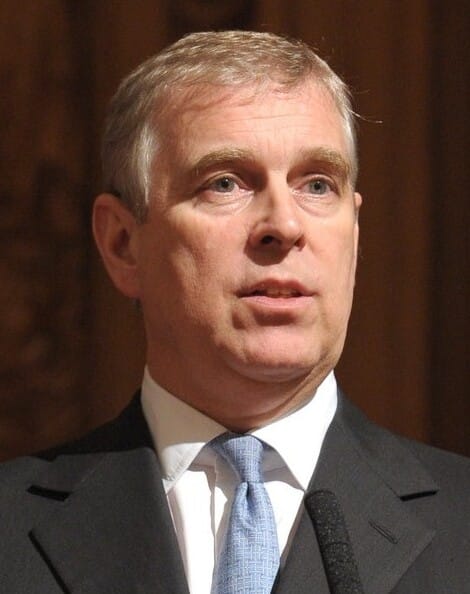
Arrested — and Repositioned
Arrested — Prince Andrew plastered across outlets this week. Seemingly hard to get away from Prince Andrew’s allegations — or is that the case for everybody, specifically the royal family? For related analysis, visit Allwin Affairs.
An arrest is a procedural act. However, it is also a psychological event that either positions or repositions someone in one’s mind. In the United Kingdom, an arrest is a detention for investigation, not a conviction. Arresting Prince Andrew only amplified the reputational impact that already preceded him.
This is not merely about an arrest; it is about reputational insulation, institutional sequencing, and the mechanics of narrative control.
Severed Before the Shock
This week, last month, last year — this did not happen out of nowhere. It has been building for an extended period of time. Prince Andrew’s removal from public office began while Queen Elizabeth II was still alive. Following widely reported civil allegations brought by Virginia Giuffre, who filed suit against him in New York in 2021 alleging sexual abuse (claims he denied and later settled without admission of liability), his public role was formally reduced.
Was this the moment when the Crown determined it had to distance itself from Prince Andrew?
When an institution like the Crown distances itself from an individual, it creates shockwaves. Over time, however, those shockwaves settle and repositioning occurs. Public memory shortens when visibility fades. Prince Andrew no longer attended military or state events in any official capacity after being stripped of his honorary affiliations and royal duties.
Blackballed — not from an industry, but from proximity to power. Blackballed from the minds of citizens who once idolized a “nepo baby.”
All of this is sequence. A sequence becomes a pattern. A pattern is not executed by an institution like the Crown without cause. The British monarchy has survived not for hundreds, but for over 1,000 years — tracing its roots to the unification of the English crown in 927 AD and evolving through constitutional transformation — because it recognizes and adjusts patterns when necessary.
It would be speculative to claim foreknowledge of future legal developments. However, the prior institutional distancing appears, in hindsight, to have reduced the degree to which current headlines directly implicate the operational core of the monarchy. Could it have predicted this?
The Repositioning of the Crown
The current monarchy did not enter this zeitgeist with reputational surplus. King Charles III’s reign began under the illustrious, longstanding controversy — something historically documented — of his infidelity to Princess Diana with, ironically, Camilla — now Queen Camilla. Somehow, it seems it has been filed away and repositioned in one’s mind. How was this completed? Public image rehabilitation in public life is rarely accidental. Stability of the Crown is central to the legitimacy of the institution it represents. An unstable monarch risks projecting that instability onto the nation itself.
We saw a version of this dynamic with former Prime Minister Boris Johnson, whose tenure was marked by political turbulence and eventual resignation. After exiting Downing Street, he transitioned into international speaking engagements — including appearances in places such as New Haven, Connecticut, a city less associated with Westminster grandeur and more with the widely reported emergency room wait times and chronic bed shortages at Yale New Haven Hospital — the kind that give one ample time to rethink, “Why was Boris Johnson waiting for an Uber?”
The continuity of the Crown has allowed it to remain the face of the nation and its military for over 1,000 years — not by accident. Reputation, when maintained consistently, provides not only a sense of security but a projection of power. By emphasizing continuity of ideals, the institution reframes prior controversies, allowing subsequent decisions to appear measured, diplomatic, and, ultimately, like the “right move.”
How the Crown Protects Itself
For a modern Crown, the need to remain steps ahead is paramount, especially as it is often perceived as societally behind the curve. Powerful institutions do not collapse from within because of a single event; they adapt and work around it. That meant taking a directive and, as a byproduct, annexing Andrew.
A personal problem becomes a professional problem when representation is involved. The “uniform,” in this case, is the skin. The “company” is the British people. The “board of directors” is the Crown. The “product” is the British outlook on life. The “employee” was Andrew.
He did not get laid off; he got “fired.” He wore his uniform while representing the Crown amid a personal scandal. By firing Andrew early, the Crown distanced itself from potential institutional damage that might have followed had he remained a working royal. This week’s outlets likely would be telling a very different story if he were still an active employee.
Narrative framing isolates individuals from the institution — this is the structure that has proven to work time and time again.
Preservation vs. Transparency
If the structure has not changed — has transparency? Institutional foresight invites scrutiny. When distancing precedes escalation, the inevitable question is why. Public trust depends not only on survival, but on clarity.
If occurrences, allegations, and files were known or circulating earlier, would that have changed how the institution was perceived? Would the Crown have been repositioned in a less-than-positive light? If everything had been known publicly and nothing had been done, the consequences for the institution might have been different.
Strategic preservation is the pattern that has sustained the Crown for over 1,000 years; public accountability, however, may be the newer expectation.
What Insulation Reveals
Durability in crisis management is not measured by noise; it is measured by insulation.
A vehicle’s bumper absorbs impact so the frame remains intact. Remove the insulation, and damage travels inward. Where insulation exists, force dissipates before it reaches the core.
That is what this moment exposes. Not merely the fate of one royal, but the structural design of the institution itself. The individual absorbs the shock — the Crown remains.
Patterns, stability, continuity — these are not accidents of history; they are maintained. In this instance, they held.

Why was “Prince Andrew” arrested?
Prince Andrew was arrested on suspicion of misconduct in public office, a U.K. common-law offence involving the alleged abuse of an official position in a way that breaches public trust. Reporting indicates the investigation relates to his conduct while serving as a U.K. trade envoy, including whether confidential government or commercial information was improperly shared. He has not been charged and was released under investigation.
Was the Crown prepared for this?
Years before the arrest, Andrew had already been stripped of royal duties and military affiliations. By formally distancing him from active representation of the monarchy, the Crown limited how far the shock could travel. When the arrest occurred, the impact centered on the individual — not the institution.
Backstory:
Andrew Mountbatten-Windsor, widely known as Prince Andrew, is the second son of Queen Elizabeth II and Prince Philip, Duke of Edinburgh. At birth in 1960, he was second in the line of succession to the British throne, directly behind his elder brother, now King Charles III. Following the births of Prince William in 1982 and Prince Harry in 1984, Andrew moved further down the line. As of 2026, he remains eighth in the line of succession.
Questions often arise as to how he remains in that position after being stripped of royal duties and styles amid the sexual misconduct allegations and the civil lawsuit brought by Virginia Giuffre, which was settled in 2022 without an admission of liability. The key distinction is constitutional. The line of succession is governed by statute, not by palace discretion. The order is determined by the Bill of Rights (1689), the Act of Settlement (1701), and the Succession to the Crown Act 2013, all Acts of Parliament. The monarch does not have unilateral authority to remove someone from the line of succession. While Queen Elizabeth II removed Andrew’s military affiliations and royal patronages and he ceased using the style “Royal Highness” in an official capacity, those actions did not alter his hereditary place in the succession. Only Parliament, through legislation, could lawfully remove him from the line. Because no such Act has been passed, he remains eighth in line despite the stripping of his public-facing royal role.
Beyond the Giuffre civil case, Andrew’s association with Jeffrey Epstein has continued to shape public scrutiny. In the 943-page unsealed Epstein-related court filing bundle published in January 2024, the exact phrase “Prince Andrew” appears 65 times, and “Duke of York” appears 5 times, based on text extraction of the document (The Guardian). Counts may vary slightly depending on OCR method, search formatting, or whether alternate references (e.g., first name only) are included in the query. The repeated references, regardless of legal outcome, reinforced his connection to the broader scandal in the public consciousness.
In February 2026, additional Epstein-related materials circulated publicly, including photographs released as part of investigative disclosures (Reuters). One image in particular drew significant attention and renewed media focus on Andrew’s past associations. While the legal implications of such materials remain distinct from reputational impact, the visual dimension intensified the scrutiny surrounding a former senior royal whose previous roles once placed him in close proximity to state authority.
Works Cited
The Guardian. “Final_Epstein_documents.pdf.” 4 Jan. 2024, https://uploads.guim.co.uk/2024/01/04/Final_Epstein_documents.pdf.
Reuters. “Photos from the Epstein Files Release.” 1 Feb. 2026, https://www.reuters.com/pictures/photos-epstein-files-release-2026-02-01/AGPLGHYYTZLUDILCL55HH63VNE/.